MS in Retail Studies
Shape the Future of Retail
Build your expertise in consumer behavior, apparel and retail industries, merchandising, and retail analytics with the Master of Science in Retail Studies (MSRS) at UNC Greensboro’s Bryan School of Business and Economics.
Choose an entirely online non-thesis concentration or a thesis concentration that combines face-to-face and online courses. With full-time and part-time study options, you can plan graduate study around your career and research goals.
COME CHAT WITH US!
Thinking about earning your MS in Retail Studies? Download our MS in Retail Studies Factsheet to learn about program formats, concentrations, costs, admissions requirements, career outcomes, and the support available to help you succeed.
30–31 Credit Hours | Online or On-Campus Options | Full-Time or Part-Time | 3 Online Graduate Certificates
Why the UNCG MS in Retail Studies?
Understand What Drives Retail
Explore the relationship between consumers, brands, products, and markets. Develop a deeper understanding of the forces shaping purchasing decisions, merchandising strategies, and the evolving retail experience.

Understand Consumer Decisions
Explore consumer behavior and the role of AI in the retail environment. Consider how consumer insights can inform merchandising and brand decisions.

Connect Products and Strategy
Study apparel and related industries, then deepen your knowledge through coursework in buying, retail analysis, brand management, or retail data analytics.

Build Skills for Your Next Step
Develop retail business knowledge through industry-informed coursework and real-world projects, with a thesis or capstone experience aligned with your concentration.
The UNCG Advantage
Build Skills for a Global Industry
Retail connects people, products, and markets around the world. Develop the strategic perspective to understand global retail operations, respond to emerging industry trends, and navigate an increasingly interconnected marketplace.
30-31
Credit Hours
The thesis concentration requires 30 credit hours. The online non-thesis concentration requires 30 or 31 credit hours, depending on the track.
100%
Online Option
Complete the non-thesis MS in Retail Studies entirely online, with tracks in Merchandising & Brand Management or Retail and Consumer Data Management.
3
Online Graduate Certificate Options
Global fashion industry management, retail merchandising management, and retail consumer data analytics.
Connect Consumers, Brands, and Ideas.
Turn Insight Into Innovation
Learn to translate consumer insights and retail data into informed business decisions. Strengthen your ability to evaluate challenges, identify opportunities, and develop creative solutions for a rapidly changing industry.
A Curriculum Informed by Industry
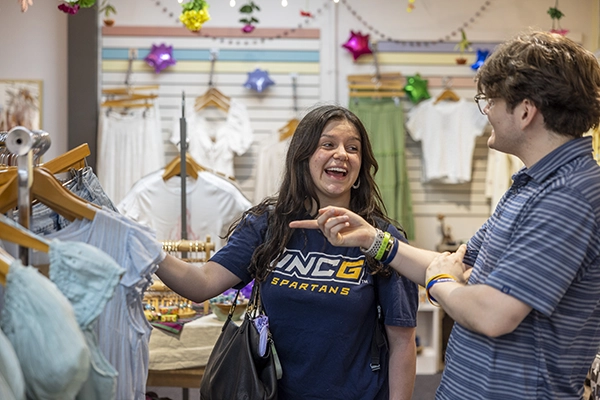
Study a globally relevant curriculum developed with input from industry leaders. Core coursework examines consumer behavior and AI, apparel and related industries, and graduate-level retail studies topics.

Distinct Paths for Your Interests
Choose the thesis concentration to develop research expertise, or pursue the online non-thesis concentration through Merchandising & Brand Management or Retail and Consumer Data Management.

Learning You Can Apply at Work
Connect classroom learning with real-world projects. Online non-thesis tracks include a supervised industry practicum and require a capstone project; the thesis concentration includes research methods and thesis research.
FLEXIBLE BY DESIGN
Online and Campus-Based Study Options
Choose a concentration and enrollment pace that support your goals. Full-time and part-time study are available; work with the program to plan your course sequence.
Online Non Thesis Concentration
- Entirely online coursework
- 30-credit hours Merchandising & Brand Management track
- 31-credit hours Retail & Consumer Data Management track
- Capstone project required
- Six-credit hour Supervised Industry Practicum
Thesis Concentration
- Mix of face-to-face and online courses
- 30 graduate credit hours
- Research methods coursework
- Six credit hours of Thesis Research
- Thesis required
MS in Retail Studies Curriculum
Build a shared foundation in consumer behavior, apparel and related industries, and graduate seminar coursework. Then complete concentration-specific courses, approved electives, and a thesis or capstone experience.
30-31
Total Credit Hours
9
Shared Core Credit Hours
21-22
Concentration Coursework
The thesis concentration totals 30 credits: nine core credits plus 21 concentration credits. The online Merchandising & Brand Management track also totals 30 credits. The online Retail and Consumer Data Management track totals 31 credits: nine core credits plus 22 track credits.
Career Ready
Designed to Move Your Retail Career Forward
Retail careers connect products, consumers, brands, and business decisions. UNCG’s MS in Retail Studies helps you develop knowledge and skills relevant to opportunities in merchandising, buying, retail analysis, brand management, and related fields.
Career Support Includes:
- Personalized career coaching
- Resume and LinkedIn reviews
- Interview preparation
- Employer and alumni networking
Career Impact
Where UNCG MSRS Graduates Have Been Hired
MSRS alumni have worked for organizations across apparel, retail, brands, and related industries, including:









UNCG MSRS graduates have advanced into roles including Assistant Buyer, Business Consultant, Buying Specialist, Enterprise Planner, Fashion Merchandiser, Marketing Manager, Material Design and Development, Merchandise Manager, Retail Analyst, and Senior Allocator.
Career Outcomes
With an 89% job placement rate, UNCG’s MS in Retail Studies helps prepare graduates for their next career move. Explore the range of roles held by MSRS alumni and consider where your interests and experience could take you.
89%
5-year average employment rate
(2021-2025)
Understanding Our MSRS Outcomes
The employment rate reflects a five-year average through the 2024–2025 reporting year, based on Bryan School First Destination data.
Student Perspectives
Meet Our Current Students
Ask current students about coursework, balancing commitments, and their experience at Bryan.
Connect with a Graduate Student Ambassador.
The MS in Retail Studies Curriculum
BUILD YOUR EXPERTISE IN THE BUSINESS OF RETAIL
Develop a deeper understanding of consumers, brands, and the retail industry through UNCG’s 30-31 credit hour MS in Retail Studies.
Begin with a shared foundation in consumer behavior, apparel and related industries, and graduate-level inquiry. Then focus your studies through a thesis concentration or an online non-thesis track in Merchandising & Brand Management or Retail and Consumer Data Management.
CORE Curriculum
Build your foundation through three required courses totaling nine credit hours.
- RCS 662 Consumer Behavior and AI in the Retail Environment
Explore consumer behavior and the role of artificial intelligence in today’s retail environment. - CRS 620 Analysis of Apparel and Related Industries
Examine apparel and related industries, from production and marketing to the global marketplace. - CRS 682 Graduate Seminar
Engage with topics and questions shaping graduate study in consumer, apparel, and retail studies.
MERCHANDISING & BRAND MANAGEMENT TRACK
Connect consumer insights with decisions about products, brands, and retail performance. This entirely online non-thesis track combines the nine-credit core with 21 credits of track coursework for a 30-credit degree.
- RCS 560 Advanced Retail Buying and Merchandising
Deepen your knowledge of retail buying and merchandising decisions. - RCS 584 Advanced Retail Analysis
Strengthen your approach to analyzing retail business decisions. - CRS 570 Apparel Brand Management
Explore how apparel brands are developed, positioned, and managed. - CRS 632 Supervised Industry Practicum
Apply your learning through six credits of supervised industry experience.
RETAIL AND CONSUMER DATA MANAGEMENT TRACK
Connect retail knowledge with analytical skills to better understand consumers and support business decisions. This entirely online non-thesis track combines the nine-credit core with 22 credits of track coursework for a 31-credit degree.
- RCS 560 Advanced Retail Buying and Merchandising
Build your understanding of the buying and merchandising decisions that retail data can inform. - CRS 605 Retail Data Analytics
Develop your knowledge of data analytics in a retail context. - CRS 651 Advanced Retail Data Analytics
Deepen your study of analytical approaches to retail questions. - STAT 640 SAS System for Statistical Analysis
Build familiarity with SAS for statistical analysis through this one-credit course. - CRS 632 Supervised Industry Practicum
Apply your learning through six credits of supervised industry experience.
THESIS CONCENTRATION
Develop your research interests through a combination of face-to-face and online courses. The thesis concentration combines the nine-credit core with 21 credits of concentration coursework for a 30-credit degree.
- CRS 605 Retail Data Analytics
Study data analytics in the context of retail research and decision-making. - ERM 680 Intermediate Statistical Methods in Education
Strengthen your foundation in statistical methods. - ERM 681 Design and Analysis of Educational Experiments
Develop your understanding of experimental design and analysis. - CRS 699 Thesis Research
Complete six credits of thesis research focused on your academic interests.
The concentration also includes six credits of electives.
BUILD YOUR ELECTIVE FOCUS
Each concentration or track includes six credits of elective coursework. Work with the program to choose courses that complement your interests, support your professional or research goals, and fit your approved degree plan.
BRING YOUR LEARNING TOGETHER
Complete a capstone project through the online non-thesis concentration or pursue a thesis through the thesis concentration.
Both online tracks include a six-credit Supervised Industry Practicum. The thesis concentration includes six credits of Thesis Research, supported by coursework in statistical methods and experimental design.
SAMPLE CURRICULUM
Explore how your coursework could fit into a full-time or part-time schedule. Your course sequence will depend on your concentration, intended start term, and course availability.
Try It Out
EXPLORE ONLINE GRADUATE CERTIFICATES
Focus your learning through a 12-credit online graduate certificate in Global Fashion Industry Management, Retail Merchandising Management, or Retail Consumer Data Analytics.
Certificate Options
Coursework from these certificates is transferable to any MS in Retail Studies concentration. Talk with the program about how a certificate can fit your degree plan.
An Investment in Your Future
MSRS Tuition and Program Costs
These estimated program costs include tuition and fees based on the 2026-2027 Graduate Tuition and Fee Schedule and do not include the cost of housing or student health insurance. Visit csh.uncg.edu for more detailed information. Tuition and fees vary depending on the program track pursued and the number of credit hours taken each semester.
On Campus Full-Time
In-State
$19,500
Out-of-State
$45,500
Assumes 30 credit hours of full-time study for 2 years
Online Part-Time
In-State
$16,500
Outside-of-NC
$26,000
Out-of-State
$43,000
Assumes 30 credit hours of part-time study for 2.5 years.
Students may complete the MS in Retail Studies in as little as one year of full-time study, with full-time completion typically taking approximately 1.5 years. The tuition estimates above use two years of on-campus study or 2.5 years of part-time online study as budgeting assumptions. Actual completion times vary by concentration, course load, and course availability.
The Outside-of-NC rate applies to online students outside North Carolina; Out-of-State applies to nonresidents studying within North Carolina. Estimates exclude housing and student health insurance.
FAQs
Questions About the UNCG MSRS
Explore answers about online and campus study options, curriculum, tuition, admissions, and retail career paths.
The Master of Science in Retail Studies (MSRS) at UNC Greensboro is a 30–31-credit graduate degree offered through the Bryan School’s Department of Consumer, Apparel, and Retail Studies. Study consumer behavior, apparel and retail industries, and concentration-specific topics through an online non-thesis option or a thesis option combining face-to-face and online courses.
Yes. The non-thesis concentration is offered entirely online. The thesis concentration combines face-to-face and online courses. Both full-time and part-time study options are available.
The MS in Retail Studies can be completed in as little as one year of full-time study, with typical full-time completion taking approximately 1.5 years. Part-time students may take longer depending on their concentration and course load. Contact the program to develop a course plan for your intended start term.
Yes. UNCG offers part-time study, including an entirely online non-thesis concentration. Discuss course schedules, workload, and practicum requirements with the program as you plan how to balance graduate study with work.
The thesis concentration requires 30 credits. The online non-thesis concentration requires 30 credits in the Merchandising & Brand Management track or 31 credits in the Retail and Consumer Data Management track. Each option includes nine credits of core courses.
All students take Consumer Behavior and AI in the Retail Environment, Analysis of Apparel and Related Industries, and Graduate Seminar. Concentration coursework adds research methods and thesis research, merchandising and brand management, or retail data analytics and data management.
UNCG MSRS alumni have held roles including Assistant Buyer, Business Consultant, Buying Specialist, Enterprise Planner, Fashion Merchandiser, Marketing Manager, Material Design and Development, Merchandise Manager, Retail Analyst, and Senior Allocator. Individual career outcomes vary.
Yes. Coursework from the Global Fashion Industry Management, Retail Merchandising Management, and Retail Consumer Data Analytics certificates is transferable to any MS in Retail Studies concentration. Each online certificate requires 12 credits. Consult the program about how certificate courses fit your degree requirements and admission plans.
The thesis concentration requires a thesis and includes six credits of CRS 699 Thesis Research. The online non-thesis concentration requires a capstone project. Both online tracks include six credits of CRS 632 Supervised Industry Practicum. Ask the program how the practicum and capstone requirements fit together.
Contact the MSRS program to discuss how its coursework, real-world projects, and concentration options connect with your career goals. The graduate recruitment team can also help you identify relevant Bryan School resources.
No. The MSRS program welcomes applicants with business and other academic backgrounds. You need a bachelor’s degree or international equivalent from an accredited institution. Required materials include transcripts or an international credential evaluation, three recommendations, a personal statement, a resume, and an online application with a $65 fee. English-language proficiency requirements apply for non-native English speakers.
No. The MSRS admissions page states that GRE scores are not required, although applicants may choose to include them. Contact graduate recruitment with questions about application materials.
Estimated 2026–27 tuition and fees for on-campus study are $19,500 in-state or $45,500 out-of-state, assuming 30 credits over two years of full-time study. Online estimates are $16,500 in-state, $26,000 outside North Carolina, or $43,000 out-of-state, assuming 30 credits over two and a half years of part-time study. The 31-credit online track may cost more. Estimates exclude housing and student health insurance; actual costs vary.
For fall entry beginning in August, the priority deadline is March 1 and the final deadline is June 15. For spring entry beginning in January, the priority deadline is October 15 and the final deadline is November 15. International applicants are strongly encouraged to apply at least one month before the published deadline.
You need a bachelor’s degree or international equivalent from an accredited institution. Your degree can be in any field. To apply, submit:
- An online application and the $65 application fee
- Official transcripts from all institutions you’ve attended, or a course-by-course credential evaluation for an international degree
- Three letters of recommendation
- A personal statement
- A résumé
- Proof of English proficiency, if required
GRE scores are optional.
Ready when you are
MSRS Application Deadlines
Start the MS in Retail Studies in the Fall or Spring. Apply by the priority deadline for earlier consideration for scholarships and financial aid, advising, and course selection.
Fall Term (Begins in August)
Priority Deadline
March 1
Final Deadline
June 15
Spring Term (Begins in January)
Priority Deadline
October 15
Final Deadline
November 15
Contact Us
Have questions about the MS in Retail Studies? Connect with our graduate recruitment team to learn more about the program, admissions, and your next steps.

Jennifer Kiger Chapman
Assistant Director of Graduate Recruitment
Phone: 336-334-4657
Bryan 301K
Jennifer-BryanGrad@uncg.edu

Savannah Martin
Graduate Recruitment Specialist
Phone: 336-334-4657
Bryan 301F
Savannah-BryanGrad@uncg.edu