Measuring the Festival’s Economic Impact
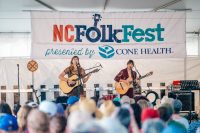
Each fall, music from the NC Folk Festival fills downtown Greensboro. Performers entertain crowds on festival stages as well as in coffee shops, restaurants and hotel lobbies. The music delights visitors while also benefiting the local economy.
According to MBA students at the UNC Greensboro Bryan School of Business and Economics, the festival generates $9.93 million in economic impact for local businesses and the community.
As part of the Bryan School’s Capstone program, four students completed the festival’s first comprehensive economic impact study. Their work gave organizers a reliable way to measure the financial value of the annual event, which attracts about 136,000 visitors during a three-day weekend each September.
Turning Data into Opportunity
Festival leaders requested the study to strengthen applications for state funding, grants and private donations.
“If we want to continue to grow this festival and provide an amazing cultural experience in Greensboro, we need to quantify our value to secure funding,” says Jodee Ruppel, executive director of the NC Folk Festival. “The students’ work will help us make our case to keep building community, arts and culture while showing off the very best of North Carolina.”
What the Numbers Revealed
The students discovered that visitors stayed an average of 139 minutes and spent between $58 and $73 at nearby restaurants, shops and other businesses. In addition, one-quarter of attendees traveled at least 30 miles to attend the festival. Those visitors generated demand for more than 1,500 hotel rooms.
The study also compared spending during the festival with other September weekends. As a result, dining spending doubled during the event. Grocery spending increased by 1.9 times, while retail and service businesses experienced a 35% increase.
“There is a clear path to expanding state and public-sector funding by translating the festival’s impact into return on investment for investors,” says Jadyn Koranteng, ’26 MBA.
Building a Stronger Festival
Beyond measuring the festival’s impact, the team identified several ways to strengthen future events. For example, the students recommended sharing the findings with downtown business owners who have raised concerns about street closures and other disruptions.
They also encouraged festival leaders to centralize data collection through a unified point-of-sale system and a visitor registry. As a result, organizers could better measure attendance, spending and overall economic impact.
“Improving your data collection can unlock more support,” adds Kyle Carlee, ’26 MBA.
In addition, the students recommended appointing business liaisons, creating promotional packages and discounts, and publishing an annual economic impact report.
Supporting Arts and Community
Savannah Thorne, artistic director of the NC Folk Festival, believes the study will play an important role in the festival’s future.
“We can gather stories from attendees that are incredibly moving,” she says. “But in this economy, we also have to prove we’re creating value to continue to be relevant. This report shows that when you invest in culture, you also invest in the vibrancy of your city and neighborhood. Now, we have the data to prove it. It will be extremely helpful for us.”